

Poissons et pêcherie
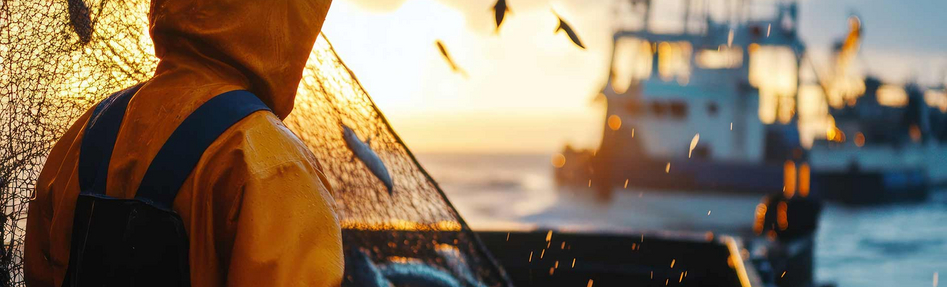
Fishes and Fisheries
Climate change, anthropogenic pressures, the stagnation of wild fisheries, and the rise of aquaculture have guided research on fish and marine fisheries over the past 20 years. 108 projects supported by the ANR have led to significant advances in ecosystem-based management (MPAs), the use of co-viability models to evaluate fishing policies, and the development of new monitoring methods such as environmental DNA. Their results show progress in climate and ecological modeling, advances in nutrition and immunology for aquaculture, and innovations for the industry and coastal communities, such as modeling tools and RNA vaccines. The research has also highlighted the impacts of microplastics and pollutants, emphasizing the need for new approaches to risk assessment. Research perspectives include the development of more resilient and low-impact farming models, the diversification of aquaculture, and an ecosystem-based and adaptive management of fisheries to meet the challenges of growing food needs, climate change, and marine pollution.
Gilles Bœuf : MHNN/Obs Banyuls and Didier Gascuel : Inst Agro Rennes
Scientific Background :
At an international level, and over the last 20 years, research into natural fish populations and their exploitation by fishing and aquaculture has been strongly influenced by 4 major concerns:
- Recent decades have been marked by a growing awareness of the already massive impact of climate change on marine resources and ecosystems. In particular, changes in the abundance and distribution of a growing number of marine populations have been highlighted, with cascading effects on fish production potential and the structure and functioning of food webs.
- In addition to climate change, research has focused on the cumulative effects of various anthropogenic pressures (habitat degradation, invasive species, pollution) not only on the state of health and dynamics of marine ecosystems, but also on the food security of seafood products.
- Over the last fifty years or so, the fishing industry has experienced an overall stagnation in production, fundamentally linked to the degradation of available resources and a fall in oceanic productivity. Scientific research has sought to gain a better understanding of the ecological mechanisms underlying this degradation and to develop operational tools for an ecosystem-based approach to fisheries management.
- Marine and inland aquaculture, on the other hand, has seen its production literally explode, with production doubling every 9 years. This development, based on the domestication of new species and the mastery of new production methods, poses particular problems in terms of the impact of aquaculture on the environment. Research has focused in particular on gaining a better understanding of the biology and ecology of species, with the dual aim of improving the zootechnical performance of farms and reducing their environmental impact.
These four major themes also structure the research funded by the ANR.
2 - Main contributions of the French Communities through ANR co-funding
In the field of natural fish populations, fisheries and aquaculture, a great deal of work has been carried out over the period under review, with 76 "ended" projects and 30 "ongoing" projects.
2.1 - Major scientific advances
- For fisheries, populations and natural ecosystems, scientific work has focused mainly on ecosystem-based management, including social impacts, stock estimation, stock/recruitment/climate change interactions, movement modelling, the implementation of MPAs and offshore webs, invasive species, biodiversity protection/exploitation interactions, and very recently the use of AI "machine learning" and environmental DNA to analyse biodiversity and populations in detail.
Significant scientific advances can be identified in the following areas in particular:
- A detailed analysis of physiological processes will provide a better understanding of the impact of climate change, from the individual to the population. For example, we are showing the mechanisms by which a rise in temperature disrupts the triggering of salmon spawning, or the enzymatic synthesis of melatonin, the hormone that controls chronobiology. We are also identifying the synergistic effects of thermal and hypoxic stress, via the energy metabolism of individuals.
- The coupling of physical, climatic and ecosystem models, and the associated methodological developments, will greatly improve the predictive capacity and reliability of climate change impact scenarios. For example, the work being carried out on pelagic ecosystems is leading to a better understanding and representation of zooplankton dynamics and its effects on exploited populations.
- These models are also leading to a better understanding of the impact of living organisms on the dynamics of carbon flows in the ocean. One programme, for example, has highlighted the impact of bacteria and gelatinous organisms on the carbon pump.
- By identifying the trophic role of certain key species or groups, we can better anticipate the risks associated with climate change. This is the case, for example, with the lanternfish, whose decline in abundance could lead to the extinction of certain colonies of sub-Antarctic predators. Cryptobenthic fish play a key role in the resilience of coral reefs.
- The development of population genetics approaches, and in particular genetic mark-recapture methods, opens up prospects for assessing population abundance independently of fisheries data.
- One operational application of this research is the development of decision-making tools for ecosystem-based fisheries management. Progress in this area still seems fairly preliminary, but several projects are proposing new indicators of the state of health of ecosystems and new procedures for issuing scientific advice in this direction.
- More generally, co-viability approaches aim to analyse the effects of different fisheries management scenarios on the ecological and economic viability of fisheries socio-ecosystems, in the context of climate change. In particular, this work shows the high risks associated with business-as-usual scenarios.
- More and more is known about the effectiveness of Marine Protected Areas (MPAs). In particular, it has been shown that the level of protection is essential for preserving biodiversity. Conversely, and quite logically, MPAs appear to be ineffective for conserving species with a high rate of movement or for managing invasive species. Non-spatial management appears preferable here.
- Finally, we note that work in historical ecology offers new perspectives that partly challenge our perceptions of the conservation or restoration of marine species. For example, this work has shown how early cetaceans were exploited and how their current abundance has been reduced by a factor of 20 or 40 compared with the Palaeolithic period.
- For aquaculture, work on nutrition (replacement of animal proteins in the diet) and nutritional quality, reproductive physiology, including sex determination, pathologies and prophylaxis, including vaccination, control of metamorphosis, genetics (identification of populations and species, estimation of variability, evolutionary markers, improvement, etc.), in fact the biological bases of aquaculture.
Significant progress has been made in these areas, and more specifically:
- The ecology of previously little studied groups is now better understood: coral fish, for example, or holocephalus or syngnathus,
- The fundamental knowledge needed to improve farm management is progressing, particularly in terms of nutrition.
- Research is focusing in particular on the replacement of animal proteins in the diet of salmonids (fishmeal, a source of overexploitation of natural resources), and on the work focuses on nutrition (replacement of animal proteins in the diet) and nutritional quality and on the organoleptic quality of finished products from various species of fish. We are particularly interested in the vegetalisation of feed and the assimilation of carbohydrates.
- New approaches such as Integrated Multi-Trophic Approaches or Aquaponics offer promising prospects for development, particularly in terms of significantly reducing the environmental impact of aquaculture.
- In the field of reproductive biology, numerous studies have been carried out on the genesis and development of fish. détermination du sexe, salmonidés, esturgeons, bar… et sur les interactions avec les polluants (PCB, PBDE).
- The use of AI, environmental DNA and, more generally, genomic approaches is increasing, as tools to assist in the management and optimisation of fish farms,
- New knowledge has been acquired about the effectiveness of the immune system (including the role of interferons) in fish, as well as the role of cutaneous microbiota (mucus) and intestinal microbiota.
- On the question of climate/pollution interactions, a great deal of work has been carried out on the study of and solutions to ocean pollution, chemical exposomes after exposure to pollutants, the effects of microplastics, the fate and effects of contaminants, climate/contamination interference, pharmaceutical residues, a focus on endangered species (eels, sturgeons, sharks, holocephalans, syngnaths, etc.), the role of epigenetics, etc.
These works have provided major insights into pollution/physiology interactions in various species of fish, including coral reefs, salmonids, hake and other coastal species, as well as Gambusia. Pollution by micro-plastics is a major concern, as is the persistence of pharmaceutical residues and endocrine disruptors in the sea and rivers. Trans-generational effects have been observed and must be considered as a major point of vigilance. A presentation was made on the use of bio-materials to counter the damage caused by UV rays.
2.2 Innovations for businesses and coastal communities
With regard to fisheries, innovative socio-ecological modelling, assessment and scenario tools have been developed to improve ecosystem-based management in all types of environment, from the Arctic to tropical seas, in order to implement methods focusing on the sustainability of operations, both on fish and invertebrates, sea urchins or clams for example. The use of FAD stations for oceanic observation appears relevant. Biodiversity/fisheries co-viability coupling models are very attractive, as are approaches to historical fishing activities and the issue of invasive species, in the Mediterranean for example with rabbitfish or coral ecosystems.
In terms of aquaculture, various models have been developed on the future of the activity, in Europe and elsewhere, on various social systems and with the formation of international networks. New sanitary treatment and vaccination techniques (including RNA vaccines for trout and carp) have been developed to combat infectious diseases and parasites. The interactions between well-fare and zootechnics have been analysed in fish farming. Various neuropeptides and other molecules have been extracted from algae, for use in pharmacology and cosmetics. Two original projects were carried out, one on the origin of methyl-mercury in the sea, the other on molecular markers of developmental competence in fish eggs.
Finally, there are programmes to improve the quality of seafood products, including the development of electronic chips to monitor storage temperatures throughout the production chain, and the development of automatic parasite detection techniques. Work on identifying communities of bacteria that affect product quality has led to the exploration of promising control strategies based on the use of competing bacteria.
3 - Research Perspectives
Today, maritime activities have a strong need for scientific research and organisation. When you consider that we had to wait until COP21 in Paris for us to finally considering the influence of the ocean on the climate and the influence of the climate on the ocean, you can imagine the current issues. They arise against a backdrop of destruction and contamination of coastlines almost everywhere in the world, over-exploitation of resources, both living and in the future mineral, uncontrolled spread of species, including invasive species (the "ecological roulette"), and accelerating climate change causing hypoxia or even anoxia, hypersalinisation, excessively high temperatures and a sudden rise in sea levels.
Fisheries are in a development situation that often fails to take into account the degraded state of the resource and the ecosystemic impacts of exploitation. In return, they have to deal not only with pollution problems, but more generally with the deleterious effects of the erosion of marine biodiversity. In recent years, we have witnessed growing instability in ecosystems and an increase in the chaotic evolution of resources. These changes pose major challenges for research, in terms of understanding them better, anticipating them if possible and identifying the most appropriate adaptation strategies.
Aquaculture, for its part, is faced with the issue of feeding carnivorous species (salmonids, marine fish such as yellowtail, sea bass or sea bream), massive coastal destruction (mangroves for shrimps), coastal pollution (problems for molluscs and algae), and a climate that is changing too quickly. We also need to encourage work on ecosystem-based management of fisheries, and research into alternative production models that have less impact on the environment and are more resilient (herbivorous species, multi-trophic approach, etc.). From this point of view, there seems to be an urgent need to move away from research based solely on the "salmon model", which is increasingly criticised regardless of the progress made on the nutritional front. There is also an ongoing need to develop solid biological foundations for aquaculture in terms of genetics, nutrition, physiology and pathology studies. All of this needs to be done in a climate of major changes of all kinds, including access to a globalised market.
ID-TAG - ID-Tag : Traçabilité de la chaîne du froid et durée de vie des aliments frais ANR-05-PNRA-0014 Sole-BEMol-pop - Devenir et effet des contaminants dans les soles : réponse biologique à l’échelle de l’individu et de la population ANR-06-VULN-0013 AMPHORE - Les aires marines protégées : outil de conservation de la biodiversité et de gestion durable des ressources halieutiques. ANR-07-BDIV-0009 TEMPANAT - ADAPTATIONS MOLECULAIRES AUX CHANGEMENTS DE TEMPERATURE: L'ARYLALKYLAMINE N-ACETYLTRANSFERASE DES POISSONS ANR-07-BLAN-0097 LAGUNEX - Export de carbone par les poissons lagunaires à l'interface mer-continent: caractérisation et quantification. ANR-07-JCJC-0135 ELL-SCOPE - Eco-toxicological and Economical Liability of eel exposed to Seasonal and global Change-induced O2-depletion and Pollution in Estuaries. ANR-07-VULN-0003 Acipensexe - Identification du sexe d'esturgeon par méthode moléculaire ANR-08-EBIO-0001 ChAains - Faible utilisation des glucides alimentaires chez la truite arc-en-ciel : rôle des interactions entre acides aminés, glucose et insuline? ANR-08-JCJC-0025 AMPED - Évaluation d'aires marines protégées comme un outil de gestion pour espèces marines migratoires à haute valeur économique ANR-08-STRA-0003 EVOLFISH - Effects of global warming and contamination on the evolutionnary response of two coastal fishes ANR-08-VULN-0004 EvolAx - Origine et diversification des mécanismes de régionalisation de la blastula chez les cordés ANR-09-BLAN-0262 BIODIVNEK - Effets à long terme des changements environnementaux sur la biodiversité nectonique et le fonctionnement des estuaires tropicaux ANR-09-BLAN-0393 MACROES - MACRoscope for Oceanic Earth System ANR-09-CEPL-0003 CONPHYPOP - Contamination et physiologie des poissons aux polluants ANR-09-CESA-0002 REPRODUCE - REPROdUCE: understanding REcruitment PROcesses Using Coupled biophysical models of the pelagic Ecosystem ANR-09-MFIS-0001 ADHOC - modèles de co-viabilité biodiversité marine et pêcheries ANR-09-PEXT-0005 Fish-Parasites - Parasites de poisson: identification du danger, impact et recherches en vue d'une stratégie efficace de prévention ANR-10-ALIA-0004 IM-MODEL@CORALFISH - "Modèle isolement-migration de l’histoire des communautés de poissons des récifs coralliens : théorie et données" ANR-10-BLAN-1726 Pharm@ecotox - Résidus pharmaceutiques et écotoxicologie en milieu marin ANR-10-CESA-0013 PhyloFish - Analyse phylogénomique des duplications géniques chez les poissons téléostéens: une approche par RNA-Seq ANR-10-GENM-0017 COMPO - "Connectivité des Populations Marines Application au Lagon Sud de Nouvelle-Calédonie" ANR-10-JCJC-1701 SDS - Rôle et évolution d’un possible déterminant majeur du sexe chez les Salmonidés. ANR-11-BSV7-0016 ÉPURE - Éléments trace métalliques Perturbations climatiques Upwelling et REssources ANR-11-CEPL-0005 MORSE - Gestion de ressources marines sous des attendus changeants : amener la perspective historique dans la conservation de mammifères marins ANR-11-CEPL-0006 EMOTION - Estimer l’effet Maternel sur la durabilité des pOpulaTions de grands pélagIques OcéaNiques ANR-11-JSV7-0007 SalTemp - Réchauffement global et adaptation à la migration chez le saumon Atlantique de rivière longue, l’axe Loire-Allier ANR-12-ADAP-0021 RecrutCell - Mécanismes moléculaires de l'engagement des cellules souches musculaires dans la fusion avec un myoblaste ou un myotube chez le poisson ANR-12-JSV7-0001 AGREENFISH - Adaptations aux transitions alimentaires en aquaculture: les caractériser et les favoriser ANR-13-ADAP-0001 Maternal Legacy - Portait moléculaire d’un oeuf de poisson de bonne qualité ANR-13-BSV7-0015 SalmoInvade - Causes and consequences of invasions of aquatic ecosystems by non-native salmonids ANR-13-EBID-0002 PhyloSex - Evolution des déterminants majeurs du sexe chez les poissons. ANR-13-ISV7-0005 WIN-FISH - Welfare, Health and Individuality in Farmed FISH ANR-14-ANWA-0008 Stay or Go - Should I stay or should I go? Determinism phenotypic et environmental de la dispersion larvaire ANR-14-CE02-0005 GenoPopTaille - Estimation de la taille absolue de population marines en danger par identification génétique des paires parent-descendant ANR-14-CE02-0006 NEMO - Neuropeptides d'organismes marins ANR-14-CE02-0020 SEAVIEW - Scenario, fishEry, ecologicAl-economic modelling and VIability nEtWork ANR-14-JPF1-0003 REEFISH - Importance relative des déterminants écologiques et évolutifs de la biodiversité des poissons coralliens ANR-15-CE32-0013 IMTA-EFFECT - Integrated Multitrophic Aquaculture for EFFiciency and Environmental ConservaTion ANR-15-COFA-0001 PRIME TRADEOFFS - Process Integration into Multispecies and Ecosystem models: Resulting ecological, economic and social trade offs ANR-15-COFA-0004 IOFLOW - La bioméchanique de la production des flux d'eau intra-oraux chez les poissons ANR-16-ACHN-0006 PAVIS - "Évaluation des relations entre les aires marines protégées et les espèces invasives" ANR-16-ACHN-0016 Fish-RNAvax - Vaccins ARN éco-compatibles pour l'induction de réponses immunitaires protectrices chez le poisson d'élevage ANR-16-CE20-0002 TRACE - Effets transgénérationnels des polluants chez les poissons: l'épigénétique et son implication en écotoxicologie ANR-16-CE34-0008 OCEAN STAR - Mimer la stratégie des espèces marines en développant des biomatériaux bio-inspirés pour faire face aux dommages induits par les rayons UV ANR-16-TERC-0022 EXOFISHMED - Poissons herbivores exotiques dans les écosystèmes méditerranéens : causes biologiques et conséquences écologiques d’une invasion en cours ANR-17-CE32-0003 REEFLUX - Flux d'énergie au sein des récifs coralliens: une perspective basée sur les vertébrés ANR-17-CE32-0006 CIGOEF - Impacts des changements climatiques sur les écosystèmes et les pêcheries océaniques globaux. ANR-17-CE32-0008 MERTOX - Découvrir l'origine de la toxine methylmercure dans les écosystèmes marins ANR-17-CE34-0010 SOCPacific - Un océan de connexions : Contextualiser les activités de pêche dans le Pacifique Sud ANR-17-FRAL-0001 BIOSYS - Biomass and fish size estimation system ANR-17-MART-0004 SEAMOUNTS - Les monts sous-marins, des habitats critiques pour la biodiversité marine ANR-18-CE02-0016 DynaMO - Elucider les bases cellulaires de la fécondité chez le poisson : dynamique et régulation de l’ovogenèse chez le medaka ANR-18-CE20-0004 PaleoCet - L'exploitation des cétacés dans le Paléolithique de l'Europe atlantique ANR-18-CE27-0018 Oxymore - Rapports isotopiques de l’oxygène des océans mésozoïques revisités ANR-18-CE31-0020 SOMBEE - Scenarios Of Marine Biodiversity and Evolution under Exploitation and climate change ANR-18-EBI4-0003 REEF-FUTURES - The futures of reef services in the Anthropocene ANR-18-EBI4-0005 SIMTAP - Self-sufficient Integrated Multi-Trophic AquaPonic systems for improving food production sustainability and brackish water use and recycling ANR-18-PRIM-0017 SUSPUFA - Sustainable production of health-promoting n-3 LCPUFA using agro food industry by-products through microalgae ANR-18-SUS2-0002 IFSEA - Transdisciplinary graduate school for marIne, Fisheries and SEAfood sciences ANR-21-EXES-0011 SIRENE - Système Ichtyologique de Renseignement Eductatif NautiquE ANR-05-RIAM-0022 PEPS - Peru Ecosystem Projection Scenarios ANR-08-VULN-0007 AQUA-MOD - Modélisation intégrée des socio-écosystèmes côtiers en appui à la durabilité de l’aquaculture ANR-14-CE18-0005 SENSO - Le dialogue environnement-hormones dans le contrôle du cycle de vie du poisson clown Amphiprion ocellaris. ANR-19-CE14-0010 Manini - Effet des stress anthropogéniques sur le recrutement larvaire des poissons coralliens ANR-19-CE34-0006 Diag-ADNe - Diagnostic ADN environnemental des Milieux Marins ANR-20-LCV1-0008 SEASIDE - Stratégies d'écoviabilité pour un développement et une gestion écosystémique des pêches ANR-20-MRS1-0003 CONTACT - Consequences of antimicrobials and antiparasitics administration in fish farming for aquatic ecosystems ANR-21-AQUA-0001 FISHNESS - Robustesse des poissons: une composante clé de la vulnerabilité de leurs populations et de la durabilité en aquaculture ANR-21-CE20-0043 GAIA - Evaluation des stratégies de gestion pour les pêcheries artisanales des lagons d'atolls ANR-21-CE32-0011 LipoFishVac - Vaccins liponanoparticulaires mARN et ADN pour les poissons, couplés à des adjuvants immunomodulateurs ANR-21-CE35-0019 PsaMAr - Des polysialyltransférases d’origine marine pour la synthèse de bioconjugués immunomodulateurs ANR-21-CE44-0032 FISHSIF - Simulations numériques d'un banc de poisson combinant hydrodynamique et forces sociales cognitives ANR-21-CE45-0005 MACHER - Adaptation mécanique à la durophagie dans l'évolution des holocephales ANR-22-CE02-0015 HOLOFISH - L'holobionte intestinal : la clé pour optimiser l'utilisation des glucides chez les truites nourries avec des régimes 100% végétaux ANR-22-CE20-0027 FISHATRISK - Détecter les trajectoires de productivité des pêcheries menacées d'effondrement ANR-22-CE32-0001 MUrFor - Managing sustainable sea urchin fishery and marine forest conservation ANR-22-EBIP-0005 EUROSYNG - Promoting action on broad ocean challenges by delving into the past, present and future of European syngnathids ANR-22-EBIP-0006 MOVE - Movescapes, connectivity hotspots and eco-evolutionary dynamics: protecting the functional role of predatory coastal fishes ANR-22-EBIP-0016 Evo-Ovo - L'évolution cellulaire et moléculaire de l'ovaire chez les poissons ANR-23-CE13-0008 MONAMI - Monogènes et microbes: communautés : le microbiote des poissons et la spécificité de leur ectoparasites monogènes ANR-23-CE20-0008 CELL2FISH - CELL2FISH Les fonction des Interferon Regulatory Factor 3/7 chez les poisson ANR-23-CE20-0025 BIOMIC - Effets des microplastiques biodégradables sur le microbiote des poissons ANR-23-CE34-0016 MOOBYF - Suivi de la biodiversité en haute mer avec les pêcheurs ANR-23-EBIP-0001 FishImmuno - Etudier le système immunitaire des poissons pour sécuriser l'approvisionnement alimentaire et la santé des populations humaines ANR-23-MRS0-0004 MRSEI-CLIMAQS - Montage d'un Réseau Scientifique Européen pour le projet CLIMAQS ANR-23-MRS3-0002 Bora-Bora - Ne jamais laisser une bonne crise se perdre (Churchill) ANR-23-SSRP-0020List of projects
