

Rapeseed, sunflower, leguminous plants... Assessing the nutritional quality of plant proteins, from farm to fork
Rapeseed, sunflower, leguminous plants... Assessing the nutritional quality of plant proteins, from farm to fork
How does your research innovate for healthier and more sustainable food?
Claire Gaudichon: Historically, our laboratory, which is primarily made up of nutritionists, works on proteins, their nutritional qualities and health effects. Initially, studies focused primarily on animal proteins. In the last decade, with rising societal and environmental concerns and expectations, calls for proposals emerged from new public policies, with our research now largely focusing on plant proteins. With its expertise in protein-based nutrition, our research unit developed original, robust, and recognized methods that can study a number of scientific questions: consuming more plant products in what proportion? With what consequences on health? Setting out from various studies, we produce data on the benefits and risks of increasing plant-based protein sources as a substitute for animal sources in human food.
How is the concept of One Health included in your research projects?
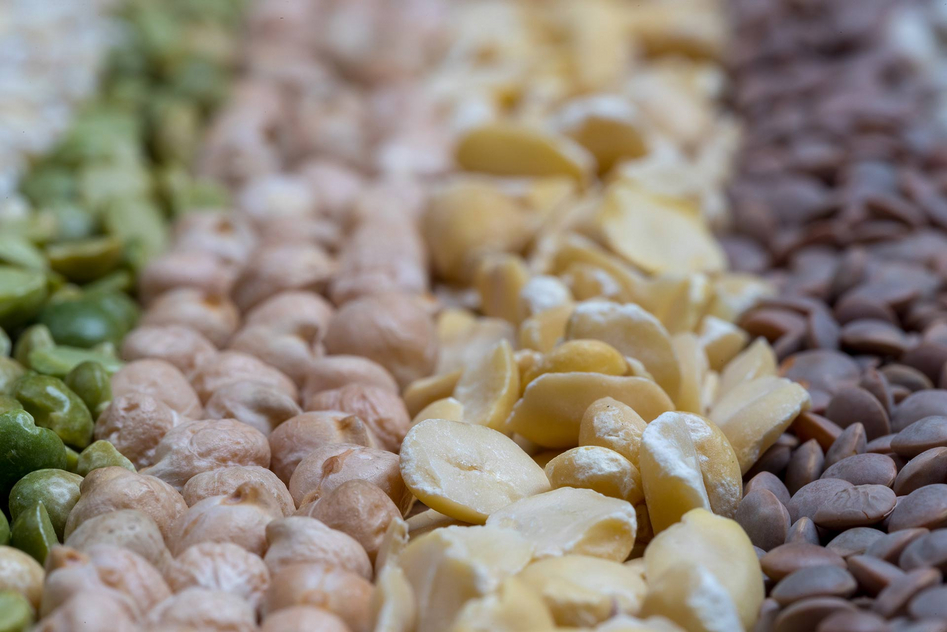
C.G. : Since 2018, we have been working on numerous projects connected to diversifying and optimising plant-based protein sources, with a view to reducing the use of animal-based products. We are trying to determine which resources can be useful in this respect, all while considering impact on health and environment. For instance, if we want to increase the production of plant-based protein sources, we must either find new plants to grow – and thus reallocate agricultural land – or repurpose already existing sources. This is true of some oilseeds and protein crops used to make oil, a protein-based coproduct of which are oil cakes, which are used to feed animals. Why not try to repurpose them for human consumption?
The ValoN project1 set out from the noted resistance in France to expanded farming and consumption of leguminous plants, especially lentils and chickpeas. We come up against a dual problem across the entire value chain: farmers can be reluctant to plant these crops, for which yields are lower than larger crops, and commercial avenues deemed uncertain. We also know that the consumption of leguminous plants suffers from a lack of attractiveness for consumers, despite the benefits they offer for trapping nitrogen in the air, soil fertility, and human health. In seeking levers that enhance the attractiveness of these plants, from the field to the consumer, we are adopting a One Health perspective.
Our approach is multi-scalar. We work with researchers who approach the issue from an epidemiological standpoint by integrating environmental parameters, and others who adopt a physiological or dietary behavioural standpoint. Surveys of various actors in food systems (farmers, seed companies, food processing industry, consumers) conducted by bio-economists identify obstacles and opportunities for innovation.
What means did ProDige use, and what results were obtained?
C. G. : ProDige was born from discussions with the industrial partner Avril, the technical institute Terres Inovia, and an academic partner, the Reaction and Process Engineering Laboratory specialising in transformation processes, notably the purification of proteins. We decided to create a collaborative project focusing on three oilseed protein resources: rapeseed, sunflower, and linseed. The first two were selected because they are extensively farmed in France (over 1 million tons of proteins per year), and linseed was chosen to implement an exploratory study on a smaller-scale crop. The project’s innovative results and technical solutions include an optimised linseed protein purification process, which yields a linseed isolate.
We also studied the quality of protein fractions obtained in vivo, and developed specific methodologies: in the field, proteins are marked with isotopic tracers, allowing us to trace them in the organism once ingested as part of experimental meals. We measure digestibility among humans directly in the intestine via catheters. Over the years, this approach helped establish quality scores for numerous animal- and plant-based proteins.
We showed that after optimising the extraction and purification processes, rapeseed and sunflower proteins from oil cakes are excellent candidates for protein diversification sources, due to their good (sunflower) and very good (rapeseed) nutritional quality. While animal-based proteins generally have the best nutritional quality scores, when we try to strike a balance that is beneficial for both the environment and health, we realize there is no “ideal protein.” The benefits of rapeseed and sunflower are numerous: they have high nutritional quality, much better than grains, and are already produced, hence there is no need to reallocate agricultural land to farm them.
Since 2023, the ValoN project has sought to promote leguminous plants. Why and how did you go about this?
C.G. : Current consumption of dried legumes in France is approximately 10 grams per person per day, or 2 grams of protein. Their consumption, which has been recognized as being good for health, has been declining for generations for a host of reasons: preference of more attractive products, loss of cooking know-how, generally longer preparation time that can include soaking before cooking, and limits of digestive tolerance.
In ValoN, we feature them by assessing their nutritional quality when they are consumed in grain form, or integrated within transformed products. A leguminous plant isolate generally has good digestibility (90%), but digestibility for the whole grain falls to 70-80%, due to the copresence of other compounds (tannins, phytates, fibres). A balance must be struck between transformation, which requires much energy and water, and nutritional quality.
These plants can be sensitive to water or drought, as well as plant bugs such as the weevil, which can greatly deteriorate harvests. The ValoN project also seeks to identify the cultural conditions that can help secure yields. For example, intercropping with service plants such as camelina, which can serve as props for lentils, has been proposed.
What is your position regarding today’s “protein mania,” which can confuse consumers seeking to take care of their health and environment?
C.G. : I am combatting this tendency to reduce food to protein. When you eat lentils, you are of course eating plant-based proteins, but also a host of compounds such as fibres, starch, etc. Western populations, including vegetarians, consume more protein than is recommended (0,83 g per kilo of body weight per day) to meet their nutritional needs. For athletes, the recommendation increases to 1.2-1.5 g/kg/day, but that is already, on average, what is spontaneously consumed by Western populations. On the level of the population, there is no need to increase proteins for this spontaneous consumption, contrary to what is conveyed by fitness and social media. In keeping with a One Health approach, it would perhaps be sufficient to rationalise our existing contributions, instead of inciting people to take supplements with no proven performance benefits. The benefits are also economic, as a 500 gram bag of lentils costs 3 or 4 euros, which is very low per portion compared to a hamburger, for instance.
Have you proposed public policy recommendations?
C.G. : Our role is primarily to generate results that allow public authorities and industrial actors to identify a portfolio of plant-based protein sources that significantly contribute to human health and food systems, and remain acceptable for consumers visually, psychologically, and in terms of taste. Our research unit is very present in assessment organisations such as Anses, in addition to the FAO and the IAEA2, which grew out of the WHO. I am regularly part of expert groups in these international bodies.
En savoir plus
Projet ProDige
Soutenu dans le cadre de l’Appel à projets générique 2016 de l’ANR
Partenariat
- AVRIL
- TERRES INOVIA
- CNRS – Laboratoire réactions et génie des procédés (LRGP) – UMR 7274 CNRS-UL
- PNCA UMR de Physiologie de la nutrition et du comportement alimentaire
https://anr.fr/Projet-ANR-16-CE21-0010
Projet ValoN
Soutenu dans le cadre de l’appel à projets Développer les protéines végétales et diversifier les sources de protéine, opéré par l’ANR pour le compte de l’État au titre de France 2030, 2023
Partenariat
- AgroParisTech - Campus Agro Paris-Saclay
- INRAE Centre Île-de-France – Versailles-Saclay (UMR ECOSYS, IJPB, LISIS, PNCA, SAYFOOD)
- CNRS Centre-Est (Vandœuvre, UMR LRGP)
- NEOMA Business School
- AGRI OBTENTIONS
Our full report: Animals, humans, environment: the ANR is committed to One Health
Unwrap
Unwrap
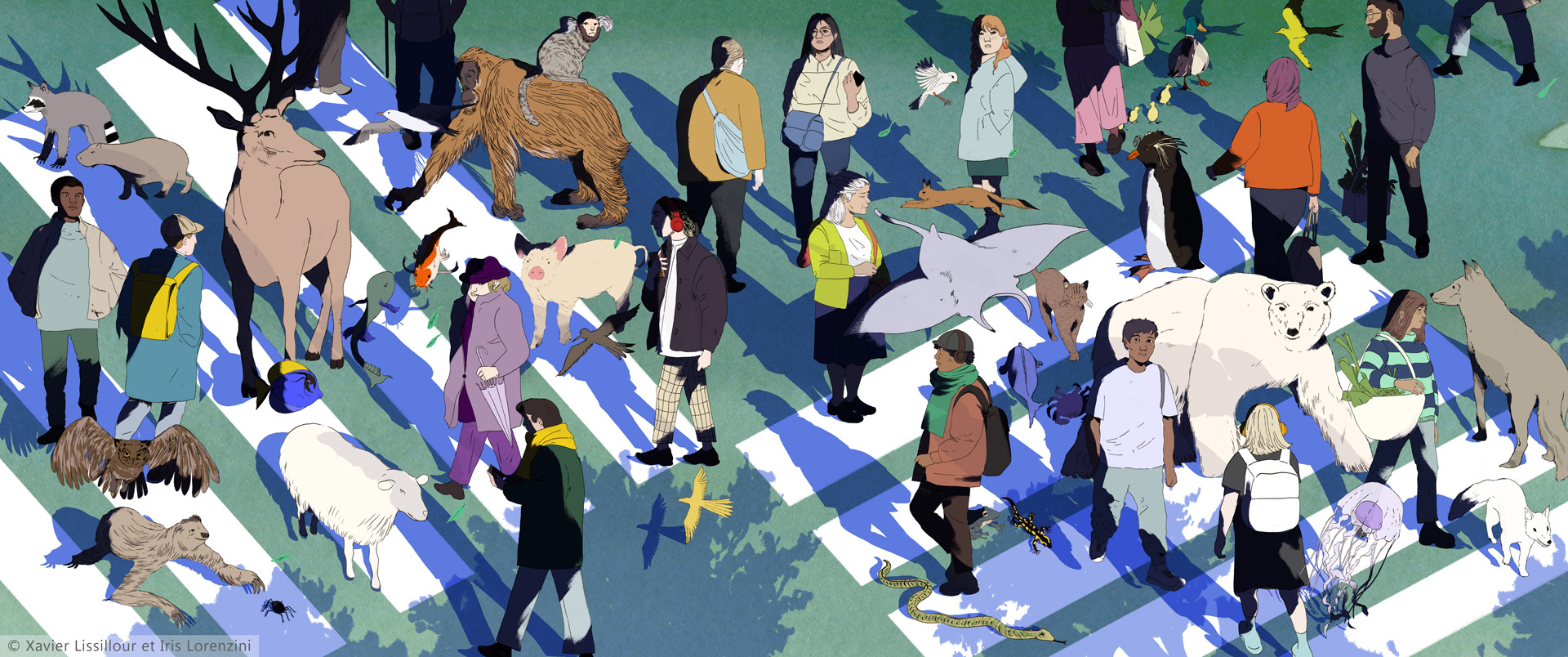
The One Health approach is based on the interdependence of human health, animal health, and ecosystem health. Adopting this holistic perspective is essential for better anticipating, preventing, and managing health risks. On the occasion of the One Health Summit, taking place April 5–7 in Lyon, the ANR looks back on more than a decade of commitment to research aligned with the One Health approach. The ANR highlights eight leaders of interdisciplinary projects, supported under the Action Plan and France 2030, through the lens of the four themes addressed at the One Health Summit and central to current health challenges.
The One Health approach, essential to combatting resistant pathogens
A collective effort to combat antibiotic resistanceMarie-Cécile Ploy, Inserm, Université de Limoges, CHU de LimogesRead the articleAntibiotic resistance in a new light: the contribution of the social sciencesHenri Boullier, CNRSRead the articleThe One Health approach, essential to healthy and sustainable food systems
Rapeseed, sunflower, leguminous plants... Assessing the nutritional quality of plant proteins, from farm to forkClaire Gaudichon, INRAE, AgroParisTechRead the articleBetween traditions and transitions: toward sustainable food systems in French overseas territoriesCaroline Méjean, INRAERead the articleThe One Health approach, essential to monitoring, preventing, and treating infectious, zoonotic, and vector-borne diseases
Antarctic islands, sentinels for better understanding panzooticsThierry Boulinier, CNRSRead the articleAt the source of zoonoses: understanding — monitoring — preventing emergence risksManon Lounnas, IRDRead the articleThe One Health approach, essential to addressing the challenge of global chemical pollution
Plastic pollution: international scientific mobilization and new research focusesXavier Cousin, INRAERead the articleUnderstanding the origin of chronic diseases and the role of the exposome across three generationsGianluca Severi, Inserm, E3N GénérationsRead the article
1 Winner, in 2022, of the Diversification of Protein Sources call for proposals of France 2030.
2 https://www.iaea.org/fr/services/atoms4food
