

Understanding the origin of chronic diseases and the role of the exposome across three generations
Understanding the origin of chronic diseases and the role of the exposome across three generations

What is the exposome, and how is it connected to the notion of One Health?
Gianluca Severi : The exposome is a concept, an approach that identifies the total exposure to which an individual is subject throughout their lifetime, as well as the organism’s biological reactions to this exposure, and its effects on health. According to various definitions, the exposome includes exposure from environmental sources as well as socioeconomic conditions and contexts, lifestyle, food, and even endogenic processes, which is to say sources internal to the organism that are part of its biological response to different types of exposure. The One Health approach thus integrates the exposome, with a broader and holistic vision recognizing the interdependence between human health and the health of animals, plants, and the environment within a shared ecosystem, and extending to the health of the planet. The relevance of these notions is obvious with respect to the contaminants that affect humans (via drinking water, air, and food), animals (fauna, farm animals), and ecosystems (soil, rivers) in interconnected fashion.
In what way are cohorts, and E3N-Générations in particular, essential tools for a One Health approach? What are their limitations?
G. S : Cohorts such as E3N-Générations, which focuses on the broad health impact of the exposome and contemporary lifestyles among nearly 200,000 people from three successive generations, are especially useful for studying issues central to One Health. These include the environmental determinants of health — such as air pollution and food contaminants — in addition to epidemics and the health impact of climate change. For example, during the Covid-19 pandemic, a consortium of cohorts including E3N-Générations helped to provide the first estimates of immune response against SARS-CoV-2 in the general population, based on infection antecedents and vaccination; to identify factors connected to infection risk; and to study the pandemic’s health impact. The limitations of cohorts for One Health research are chiefly connected to data gaps for certain environmental aspects such as biodiversity, as well as to difficulties in accurately assessing individual exposure to certain environmental factors.

What importance do temporal and intergenerational aspects have in a One Health approach?
G. S : Environmental exposure, climate change, and health determinants evolve over long timescales stretching years or decades. For example, for chronic diseases, these determinants do not just produce immediate effects, but also risk trajectories. Temporal aspects and life course approaches are therefore essential to identifying persistent and deferred health effects.
In addition to the One Health approach’s deep connection to sustainability and sustainable development, what introduces an intergenerational dimension is the fact that some environmental issues have a direct impact on multiple generations, such as antibiotic resistance, climate change, and biodiversity erosion, and potentially intergenerational ones when the effect of exposure on a given generation impacts the health of the next generation or ensuing ones.
For a number of years, the E3N-Générations cohort has been used to study relations between environment and cancer. What are the potentially intergenerational risks of exposure to observed pollutants (water, air, food), notably breast cancer and other chronic diseases?
G. S : The research based on the cohort regarding the environmental determinants of health on the national and international level, conducted in collaboration with various research actors, enabled us to show, for example, that exposure to air pollution is a risk factor for breast cancer, and that even at moderate levels, it is associated with a higher risk of developing lung cancer, as well as mortality.
Thanks to the work of Francesca Romana Mancini, an epidemiologist at Inserm, studies on food contaminants were also conducted on the cohort to reveal the links with different types of chronic diseases. For example, food is the leading source of human exposure to certain persistent organic pollutants such as polychlorinated biphenyls (PCB), which were very widely used between 1930 and 1970 as lubricants in industry. The production and use of PCBs has been banned since the 1980s, but they accumulated in the environment, and can be found in animal source foods. Cohort studies showed that non-dioxin-like PCBs from food increase the risk of weight gain, excess weight, and obesity among adult women. Another cohort study, coordinated by the Prevention, Cancer, and Environment Department of the Léon Bérard Comprehensive Cancer Centre in Lyon, focused on PCB levels in the air, and demonstrated an association with breast cancer. Research on intergenerational aspects are underway to study exposure to PFAS1 in food across two successive generations, and to better grasp how these substances are transmitted from one generation to another.
While the general public is increasingly informed of the potential harm of exposure to pollutants in the air and water, the harm connected to noise exposure and light pollution have garnered less media attention. Do you study them as well, and have you observed any trends?
G. S : Yes. Exposure to noise and artificial light impacts health through the activation of stress, as well as disturbances to sleep and circadian rhythms. Recent research based on E3N-Générations, coordinated by Élodie Faure from my team, has shown that long-term exposure to noise, especially at night, is associated with a moderate increase in the risk of type 2 diabetes. The results of another cohort study suggest that the risk of developing breast cancer increases in linear fashion as the level of exposure to nocturnal light increases.
Can your research lead to public policy recommendations? With respect to knowledge of risk factors, but also prevention?
G. S : The research conducted in connection with E3N-Générations and similar cohorts is essential to generating the information needed for recommendations to limit the harmful effects of some forms of environmental exposure. For example, the results of our studies on noise and artificial light could help better define exposure limits to avoid any harmful effect on health.
According to you, what progress can be made towards One Health, and how can cohorts contribute?
G. S : The room for progress is significant, given that our knowledge regarding the interactions between human health, animal health, environmental health, biodiversity, and climate change remains limited. With this in mind, cohort studies will play a very important role, as will their enhancement with new types of data on biodiversity, in addition to detailed characterisation of exposure to new types of environmental exposure.
More informations
E3N-Générations Project
 Supported by the French government as part of France 2030, in connection with the Cohorts call for proposals, 2010
Coordinating institution: Université Paris-Saclay
Partnership
- Institut Gustave Roussy
- Inserm Délégation Paris IDF Sud
Our full report: Animals, humans, environment: the ANR is committed to One Health
Unwrap
Unwrap
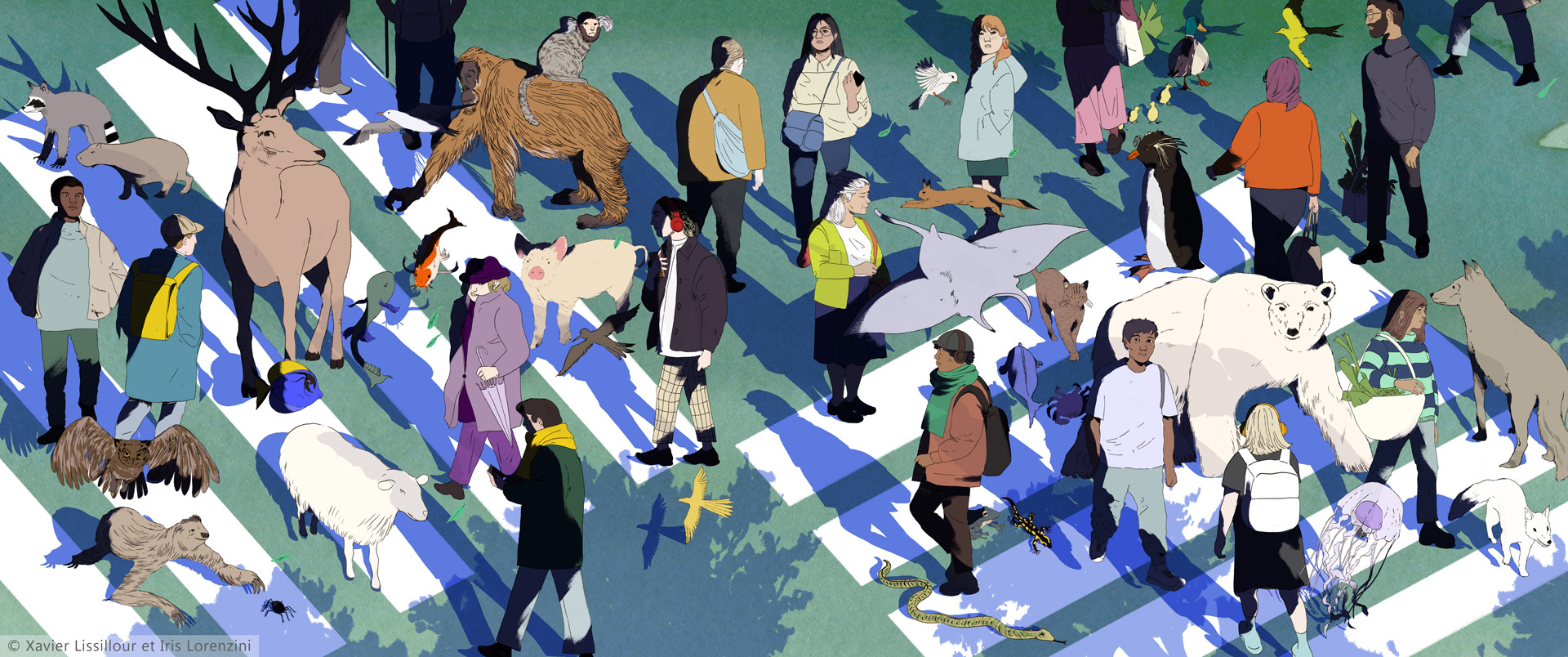
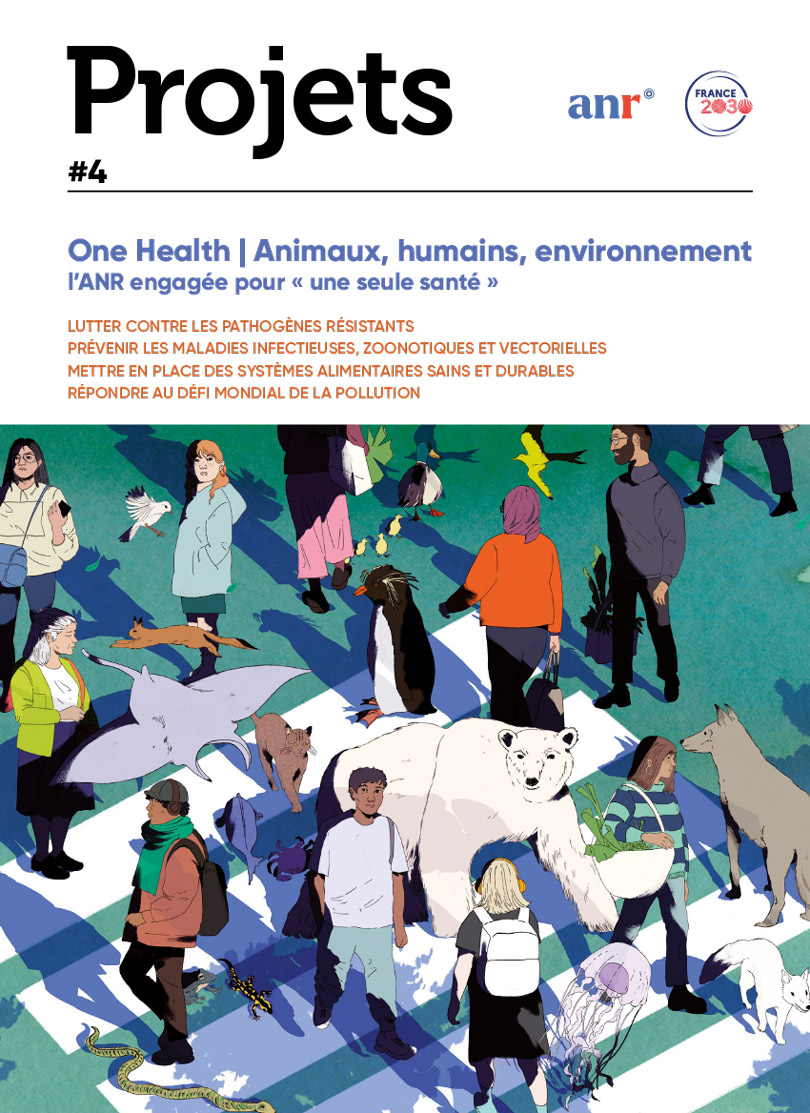
The One Health approach is based on the interdependence of human health, animal health, and ecosystem health. Adopting this holistic perspective is essential for better anticipating, preventing, and managing health risks. On the occasion of the One Health Summit, taking place April 5–7 in Lyon, the ANR looks back on more than a decade of commitment to research aligned with the One Health approach. The ANR highlights eight leaders of interdisciplinary projects, supported under the Action Plan and France 2030, through the lens of the four themes addressed at the One Health Summit and central to current health challenges.
The One Health approach, essential to combatting resistant pathogens
A collective effort to combat antibiotic resistanceMarie-Cécile Ploy, Inserm, Université de Limoges, CHU de LimogesRead the articleAntibiotic resistance in a new light: the contribution of the social sciencesHenri Boullier, CNRSRead the articleThe One Health approach, essential to healthy and sustainable food systems
Rapeseed, sunflower, leguminous plants... Assessing the nutritional quality of plant proteins, from farm to forkClaire Gaudichon, INRAE, AgroParisTechRead the articleBetween traditions and transitions: toward sustainable food systems in French overseas territoriesCaroline Méjean, INRAERead the articleThe One Health approach, essential to monitoring, preventing, and treating infectious, zoonotic, and vector-borne diseases
Antarctic islands, sentinels for better understanding panzooticsThierry Boulinier, CNRSRead the articleAt the source of zoonoses: understanding — monitoring — preventing emergence risksManon Lounnas, IRDRead the articleThe One Health approach, essential to addressing the challenge of global chemical pollution
Plastic pollution: international scientific mobilization and new research focusesXavier Cousin, INRAERead the articleUnderstanding the origin of chronic diseases and the role of the exposome across three generationsGianluca Severi, Inserm, E3N GénérationsRead the article
1 Perfluoroalkyl and polyfluoroalkyl substances.
