

At the source of zoonoses: understanding — monitoring — preventing emergence risks
At the source of zoonoses: understanding — monitoring — preventing emergence risks

Zoonoses, infectious diseases that can lead to epidemics and pandemics, are caused by a pathogen that spreads by crossing species, from animals to humans and vice versa. They are transmitted either by direct contact with an infected animal, or indirectly via food, the environment, or a vector that is a pathogen reservoir, such as mosquitos or ticks. They represent a public health challenge, and are at the heart of One Health approaches. First, their prevalence and incidence continue to grow, with little concern for borders: 60% of human infectious diseases are of animal origin (Ebola, Covid-19, or HIV), a number that rises to 75% for those that are emerging. Their occurrence is exacerbated by the rising anthropic pressures weighing on ecosystems: global warming, intensified international trade, extreme human density in cities, and deforestation, among others. Their management also generates considerable health, logistical, social, and economic costs.
Initiatives on the national and international level
In response to recent pandemics, during the One Planet Summit on Biodiversity in January 2021, French President Emmanuel Macron announced the PREventing Zoonotic Disease Emergence (PREZODE) international initiative, involving over 1,500 scientists across the globe. At the same time, the government established the national strategy for Emerging Infectious Diseases and Nuclear, Radiological, Biological, and Chemical Threats. As part of France 2030, Cirad, INRAE, and the IRD were tasked with mobilising the French scientific community around a dedicated research programme, the PREZODE PEPR. Located after PREZODE on the emergence spectrum, the Emerging Infectious Diseases programme (PEPR MIE, ANRS-MIE Inserm) focuses its complementary efforts on clinical, health, and societal research on diseases once they have become full-fledged epidemics.
An issue without borders, with cascading effect
These changes of scale between local diseases, epidemics, and pandemics are accelerated by global transitions that promote contact between humans, domestic animals, and wildlife, thereby increasing the risk of transmission. Lounnas continues: “As with Nipah virus, which emerged in Malaysia in the late 1990s, intensive agriculture and deforestation for economic ends drove fruit bats carrying the pathogen to seek out fruit trees located near pig farms, leading to human contamination. Intensive agriculture and land use changes also led to the movement of vectors toward new latitudes, resulting in the arrival of arboviruses in Europe, which had not been observed before.” Zoonoses also threaten food security, when genetically similar livestock prove vulnerable to pathogens, and undergo massive slaughtering. Lounnas explains this via “the dilution effect”: “the diversity of a species community is inversely proportional to the risk that a pathogen can circulate and develop within it. Not all have the same ‘ability’ to transmit a pathogen.”
Adapting to a diverse range of cases and terrains
“PREZODE’s identity is to have a firm grasp of all factors affecting scale and dynamics locally and globally, and that connect animal health, human health, food systems, and the environment. There is no single solution,” indicates Lounnas. Hence the need for a One Health approach, one that is multidisciplinary and also integrates the social sciences and participatory research. The CARE project, for instance, is based on a community approach by studying risky behaviour in France, Ivory Coast, and Zimbabwe. What gestures can increase the risk of infection? What solutions can be co-constructed to be both effective and locally acceptable? “Top-down directives quite often make no sense for communities, who are forced to apply them. There is even a risk of an opposite effect, as populations do not feel involved in the action’s development.” PREZODE therefore functions according to “wildlife-livestock-human interfaces,” and new areas of vulnerability. Examples include poultry markets in Vietnam and Bangladesh, the focus of the ZOLA project aiming to limit the spread of avian influenza, or the territorial approach of the ZOOCAM project in Camargue, France.
There is a diverse range of geographic, epidemiological, and societal contexts, and of pathogens as well. The portfolio of pathogens that will serve as models — most of which represent a pandemic risk and a threat to France — were constituted via calls for proposals. These include avian influenza, Crimean-Congo haemorrhagic fever, rabies, mosquito viruses (arbovirus), rat-borne pathogens (virus and leptospirosis), and trematodes, parasites that come through snails and infect livestock. However, the programme is prioritising an agent that we do not yet know about: “pathogen X.” “It is precisely because we do not know which one will cause the next pandemic that the programme concentrates on risk prevention before emergence.”
Innovative solutions for initial results
PREZODE offers an original approach centred on risks, which it pursues via three work packages: Monitor — Understand — Prevent, consistent with changes to the One Health framework proposed in 2021 by the One Health High-Level Expert Panel (OHHLEP). Special emphasis is placed on the “4 Cs: Communication, Coordination, Collaboration, Capacity building.” Projects must generate innovation that is simultaneously diagnostic, technical, and methodological. Lounnas cites multiple projects that aim to improve monitoring: “The INSTEAD project on the West Nile and Usutu viruses will capture sound recordings from bird reservoirs to infer population density at certain sites, and connect them to emergence risks. The project also conducts molecular monitoring of vectors before transmission to humans. The HODAS project monitors fever among bovine populations. The CAVICOR project in Cameroon is developing a method for the air-borne capture of coronavirus in the cellars or caves where bats live. Non-invasive monitoring of wildlife, which is less reliable than for livestock, is a major technical challenge. Artificial intelligence can also help identify weak signals and generate models: the TALEDZ project uses it on poultry farms in the French West Indies.”
PREZODE’s demographers, sociologists, anthropologists, health economists, epidemiologists, veterinarians, and ecologists will generate a great deal of disparate data, which modelling will connect with impacts observed in ecosystems. “This will enable us to create propagation models based on potential similarities, while a prospective study will develop scenarios for 2050. We also encourage the use of nature-based solutions, such as agroforestry, to reintegrate biodiversity in certain landscapes, all while maintaining subsistence farming activity. Serious games will also be used to raise awareness among stakeholders and elected officials.”
The initial contributions for the eleven on-going projects are emerging: “The ARCHE project on Crimean-Congo haemorrhagic fever confirmed that the virus was circulating in the South of France, and that the exposure of animals to ticks was a risk for human populations. As part of the AMAZED project, gathering mosquito samples will help identify the arboviruses carried by these species within habitats subject to various degrees of anthropization. Models will integrate this field data, helping to identify the links between climate change and anthropization in French Guiana, the French West Indies, and New Caledonia.”
Instilling a genuine culture of “One Health-Ness”?
In an encouraging sign, some countries have been precursors in institutionalising these strategies. “Cameroon is very active with a One Health platform, the Yaoundé One Health forum. South Asia, Indonesia, and Belgium have also mobilised. And France as well of course, as demonstrated by the presidency of the 2026 One Health Summit, in which we took part.” Lounnas believes there are two essential levers for supporting and implementing these approaches within governance. “Maintaining an ‘institutional memory’ is crucial to avoid continually beginning advocacy efforts. The One Health foundation should transcend the agendas and political orientations of countries, and endure ‘in between crises.’ Studies from the social sciences relate that in order for the notion to take hold, it must become rooted in peoples mind’s, until it becomes a part of identity.” How can we ensure that the idea of taking care of our environment and animals in order to take care of ourselves becomes self-evident? “Numerous indigenous communities are already connected to the living world, and are not heard due to dominant capitalist discourses. I also believe that the education of children, tomorrow’s adults, also promises hope.”
Our full report: Animals, humans, environment: the ANR is committed to One Health
Unwrap
Unwrap
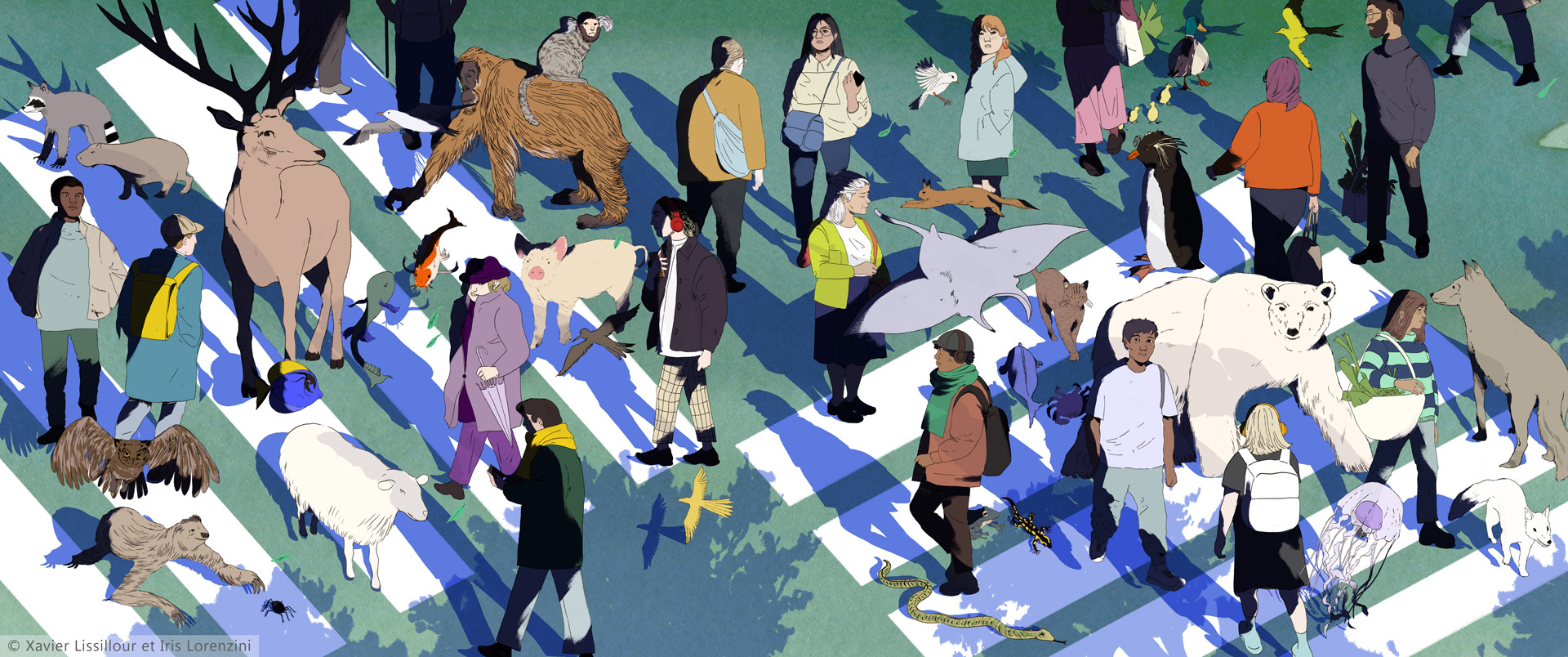
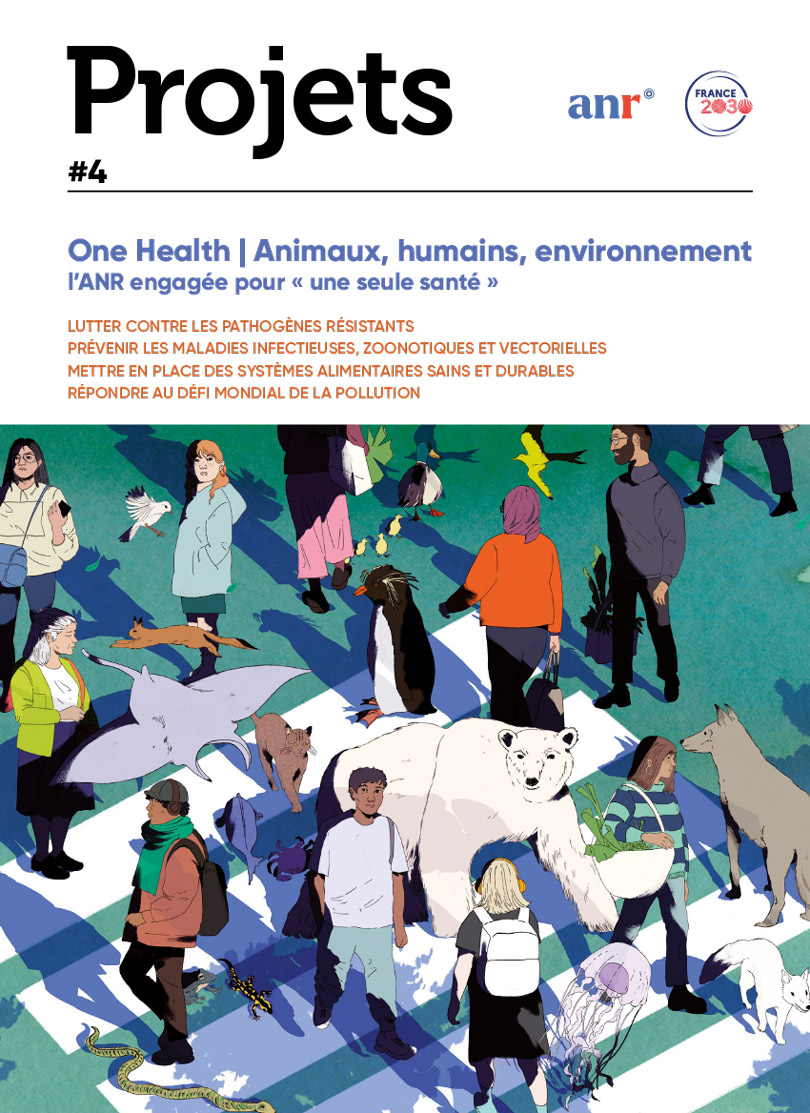
The One Health approach is based on the interdependence of human health, animal health, and ecosystem health. Adopting this holistic perspective is essential for better anticipating, preventing, and managing health risks. On the occasion of the One Health Summit, taking place April 5–7 in Lyon, the ANR looks back on more than a decade of commitment to research aligned with the One Health approach. The ANR highlights eight leaders of interdisciplinary projects, supported under the Action Plan and France 2030, through the lens of the four themes addressed at the One Health Summit and central to current health challenges.
The One Health approach, essential to combatting resistant pathogens
A collective effort to combat antibiotic resistanceMarie-Cécile Ploy, Inserm, Université de Limoges, CHU de LimogesRead the articleAntibiotic resistance in a new light: the contribution of the social sciencesHenri Boullier, CNRSRead the articleThe One Health approach, essential to healthy and sustainable food systems
Rapeseed, sunflower, leguminous plants... Assessing the nutritional quality of plant proteins, from farm to forkClaire Gaudichon, INRAE, AgroParisTechRead the articleBetween traditions and transitions: toward sustainable food systems in French overseas territoriesCaroline Méjean, INRAERead the articleThe One Health approach, essential to monitoring, preventing, and treating infectious, zoonotic, and vector-borne diseases
Antarctic islands, sentinels for better understanding panzooticsThierry Boulinier, CNRSRead the articleAt the source of zoonoses: understanding — monitoring — preventing emergence risksManon Lounnas, IRDRead the articleThe One Health approach, essential to addressing the challenge of global chemical pollution
Plastic pollution: international scientific mobilization and new research focusesXavier Cousin, INRAERead the articleUnderstanding the origin of chronic diseases and the role of the exposome across three generationsGianluca Severi, Inserm, E3N GénérationsRead the article
