

Data, analyses and impact studies

Collecting and editorialising research data
Data collection occurs at all stages of research projects: submission, evaluation, selection, contracting, monitoring, and impact. To facilitate reporting for projects from the Work Programme, in 2024 the Agency implemented a new tool, OASIS, for monitoring ongoing projects from its Generic or Specific Calls for Proposals. It carries out occasional studies to shed light on certain aspects of projects, all while providing access to data in real time. The data pertaining to France 2030 projects is gathered annually via a dedicated tool, Ac@cia, on the basis of objectives and performance indicators defined by an agreement between the French government and the ANR.
Another significant advancement is that since June 2023 and the launch of the data.anr.fr platform, all ANR staff members use a single source of reliable and editorialised data to provide the first levels for assessment and analysis.
This internal data is supplemented by the data collected as part of a major monitoring effort on the European and international scale, with a view to providing context and perspective for projects funded by the ANR.
Measuring and analysing results
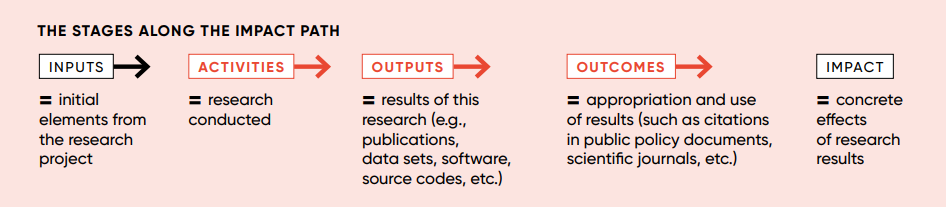
On this basis, the ANR develops quantitative assessments–per project and portfolio of projects–using specific impact indicators depending on the field of research.
France 2030 projects are subject to syntheses, impact studies, and evaluations in connection with the assessment programme of the Supervisory Committee for Investments for the Future (CSIA). For example, a study was launched in 2024 on the PEPRs relating to national acceleration strategies.
For projects connected to the ANR Work Programme, focusing on upstream and "curiosity-driven" research the process is different, with the measurement of results proceeding a posteriori.This is central to ex-post analyses, which require in-depth study, investigation, and cooperation from external experts in accordance with needs.
Beyond evaluating projects, these assessments and analyses, which are grouped together by funding instrument, scientific topic, region, etc., allow the ANR to refine the strategic management of investments, and to adjust the programming for its Work Programme and associated investments. At the same time, specific studies are also produced in response to requests from various actors (partners, supervisory ministry, Cour des Comptes, general inspections, parliamentary inspections, etc.).
Widely communicating research results
Supporting scientific communities, inspiring public policy…The impact of research is also based on the diffusion and transfer of its results. In 2024, the ANR launched its platform data.anr.fr, increased publications and meetings, and developed an entire technology transfer ecosystem combining targeted publications with more open communication actions, such as conferences, intended for an ever larger audience.
Since 2021, a transversal organisation
In 2021 the ANR created a Digital Strategy and Data Department (DSD), consisting notably of a Data Governance Service and a Review, Study, and Impact Service specifically tasked with measuring the effectiveness of Agency funding. To analyse and highlight research results relating to the ANR Work Programme, the DSD works with the scientific departments of the ANR Scientific Operations Division (DGDS). The Major Government Investment Programmes Division (DGPIE), in connection with the DSD, includes a dedicated service for reviewing, evaluating, and completing impact studies for France 2030 projects, for which the shared indicators were identified in connection with the General Secretariat for Investment (SGPI). The Agency is also involved in international organisations such as the OECD and Science Europe, with a view to identifying and sharing methods and indicators.
For further information
Follow-up summaries and evaluation of projects funded under France 2030
« Women and men in science analyses » (in French)
