

First Haitian sessions on higher education

This event, associated with the sessions on educational quality in Haiti held during the preceding two days, took place two years from the term of the Millennium objectives. The aim was to conduct a national reflection on higher education with the prospect of opening it up to the needs of the society and linking it to the other levels of the educational system.
 The Haitian government wishes more specifically to clarify and reinforce its strategy to improve and modernise the country's higher education. The event thus brought together specialists and academic - both Haitian and foreign - from Europe, the Caribbean Islands and North America. They discussed their thoughts, experience and viewpoints on questions relating to the quality of teaching, the research and innovation capacities, governance and the diversification of funding sources.
The key points addressed included the links between societal challenges and higher education, and the question of the university model to adopt in view of the country's history, its past experiences, its resources and needs and the geopolitical situation. The experts moreover pondered on questions such as the means of promoting research within the Haitian university, the place to give to international cooperation in setting up sustainable structures, and the appropriate funding mechanisms.
 Retrospective of the experience of ANR's Flash Haiti call for proposals
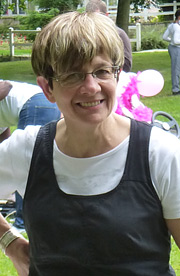
Christine King, head of the Flash Haiti programme at ANR and Yves Le Bars, chairman of the programme monitoring committee, were invited to the sessions by the MENFP in order to share the lessons learned from the call for proposals launched in 2010 at a round table to assess the situation of university research in the country.
Christine King
head of the Flash Haiti
programme at ANR
The Flash call for proposals was set up in response to an urgent need following the natural disaster that hit Haiti in 2010. The evaluation allowed the rapid selection of eight projects and their launching within four months after selection. The funding allocated to the projects totalled €3.4 M, with the intention of learning lessons from the disaster through scientific analyses and the acquisition of data in an exceptional context very rarely studied in a post-emergency situation.
Whether relating to health, education or economic development, the funded projects were designed to promote or reinforce Franco-Haitian partnerships and encourage long-term collaboration.
They address subjects that are fundamental for Haiti, such as the health of population, the development of agriculture, the habitat, waste treatment, the data necessary for regional planning and risk management, but also administrative documentation such as the land registry, civil status and employment papers, faced with the loss of institutional and personal archives.
On completion of their work, several projects propose concrete ideas for creating new bases for community living, as well as keys to understanding the resilience of the systems. They are accompanied by an aid to the appropriation of new technologies and/or know-how in varied areas that can underpin public policies or provide potential support for socio-economic development.
The Flash Haiti projects involve Haitian researchers in the work. They bear witness to the quality of the ties binding the French and Haitian research teams and the impetus for co-construction over a time frame that should exceed the duration of the projects.
Find out more:
| The Flash call for projects is designed to support an urgent need for research whose scientific relevance is linked to an event or a natural disaster of exceptional scale. The aim is to finance the work necessary for the acquisition of rare information and data that are impossible to obtain in normal situations. Deployable at any time and dependent on the responsiveness of ANR and the local and French research teams, the Flash instrument allows projects to be selected and funded in a short time frame without detracting from the fundamental principles of ANR for as much. To date it has been used twice, the first time in 2010 following the earthquake in Haiti and the second time in relation with the consequences of the earthquake and tsunami that hit Fukushima in Japan. The funding granted allows the necessary work to be started rapidly pending its takeover by a conventional research project. |
