

Énergies marines renouvelables
MARINE RENEWABLE ENERGIES
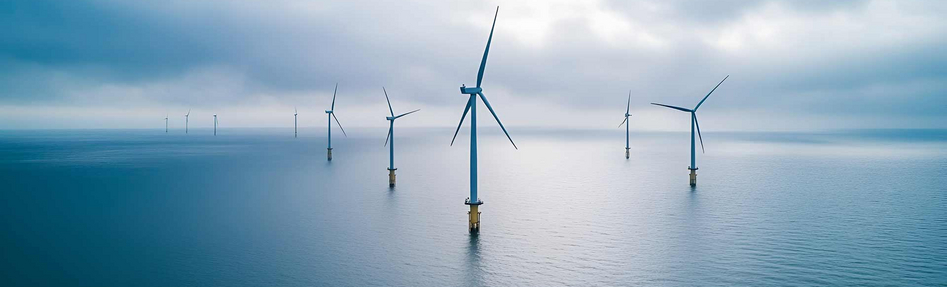
Marine energies include two categories: bioenergy (algae, phytoplankton) and marine renewable energies (especially offshore wind), both of which play a central role in the energy transition. 21 ANR projects have mainly supported the study of the development of offshore wind and its global impact. Major advances in the reliability of infrastructures, their environmental integration, and maritime space planning have thus been made. This research promotes industrial innovation, international competitiveness, and the coexistence between energies, biodiversity, and human activities. Offshore wind, the only mature large-scale technology, still requires efforts to better understand its ecological and social impacts, strengthen its acceptability by the population, and integrate the effects of climate change.
Jean-Francois Filipot : France Energie Marine
1. Scientific background
Marine energies are at very different stages of maturity, with offshore wind being the only technology capable of making a massive contribution to energy mix.
This technology still faces a number of challenges that will require advances in research in the following areas:
Characterisation of wind energy production and weather conditions:
Knowledge of wind energy production is a critical input for defining wake models between machines. These two issues need to be tackled in order to refine our knowledge of offshore wind and the air-sea interactions or flows that affect wind profiles, interactions that also affect the development of wind turbine wakes.
These subjects will be of growing interest with the deployment of increasingly large turbines, interacting with the atmospheric boundary layer, coupled with farms that are also more massive, whose wakes could disturb farms located downwind.
At the same time, knowledge of atmospheric turbulence at sea is another key factor, influencing the intensity and extent of wakes, as well as turbine sizing. This is a particularly important issue for sites at great depths (typical of floating wind farms) where no measuring masts are available. In this case, measurements have to be taken from lidars deployed on buoys, a constraint that significantly complicates the exploitation of the backscattered signal and constitutes a research topic in its own right.
Defining the extreme wind, wave and current conditions generated by mid-latitude storms and tropical cyclones is a critical issue for the design of offshore wind turbines. In particular, these conditions require observation systems capable of withstanding the elements. Satellite measurements are extremely valuable in this context, as the sensors are not subjected to storms, but indirect measurements can still be improved to refine our knowledge of extreme winds and waves.
Among extreme waves, breaking waves represent a potential danger for offshore wind turbines: they can damage the foundations and excite the modes of the tower and endanger sensitive components of the nacelle. Research efforts are essential to correctly qualify the loads they induce on structures by estimating the statistics for the occurrence and severity of these events at sea and developing numerical and semi-analytical models of the associated forces.
Climate change is modifying and will continue to modify storm occurrence statistics, as well as average wind, wave and current conditions. It therefore has an effect on the producibility of farms, as well as on the sizing of machines in terms of fatigue and extremes. Exploiting climate-related issues for offshore wind applications is a major challenge for the industry.
Sizing offshore wind turbine systems and sub-systems and in-service monitoring:
In this area, it should be noted that an increase in the maturity of floating wind turbines is critical if France is to meet its 2050 deployment targets.
These systems are already in operation in several pilot farms in France and abroad, but the transition to commercial scale requires the technologies to be de-risked and their competitiveness to be accelerated.
Offshore maintenance of these systems is a major hurdle that needs to be overcome if we are to catch up with the costs of land-based wind power. For the time being, heavy components can only be maintained by bringing the machines back to port, which leads to additional costs that need to be eliminated. We therefore need to develop technological solutions capable of replacing heavy critical components such as the blades or turbine gearbox at sea, from a floating support (the wind turbine float).
At the same time, it is critical to reduce uncertainty about weather windows by improving short-term forecasts using statistical learning methods that combine numerical model forecasts with historical data and real-time wind and wave measurements.
In-service monitoring of floating wind turbines should also provide a better estimate of their state of wear (fatigue) and enable maintenance plans to be adjusted to reduce costs. Setting up digital twins is therefore a major area of research for the industry. Research activities targeting the improvement of numerical models of aeroservo-hydro-elastic behaviour are central, as is the development of sensors capable of providing information on the key parameters to be used as inputs to these numerical codes.
Floating wind turbines also carry two critical technological building blocks for which advances in research are expected. The first is the dynamic power cable, which exports power from the wind turbine to the electrical substation. This component is known to be one of the most significant sources of potential failure, but its hydro-mechanical behaviour still needs to be qualified, particularly through tests at sea or in a representative environment, which should also be used to validate sensors and measurement protocols capable of representing its deformations and failures. Anchoring lines are a second sensitive technological building block. Developments are expected in the field of ageing qualification of synthetic ropes (e.g. polyamide) and the pooling of anchors, or even anchor lines, to help reduce installation, maintenance and decommissioning costs for floating wind turbines.
The electrical substation is another critical component of the farms. Any failure in this system, which collects the power from all the wind turbines on a farm and exports it to the mainland, would result in a total loss of the energy produced. Research needs to be carried out to prepare for the increasing power of the farms (towards 1 GW or more per farm), their distance from the coastline, which will require them to use direct current to limit load losses, and the greater depths expected for the next commercial floating wind farms, which will require the installation of floating electrical substations.
2 – Main contributions of the French communities through ANR cofounding: A brief analysis of the outcomes of the different projects is presented:
SYMBIOSE: Study and Optimisation of the Microalgae-Anaerobic Bacteria Coupling for Biological Energy Production from Primary Biomass and Organic Waste.
Combining microalgae cultivation and anaerobic digestion to produce energy Joint recovery of liquid, solid and gaseous effluents to produce bioenergy The aim of the project is to combine microalgae cultivation to capture CO2 from industrial sources with an anaerobic digestion process to recycle the nitrogen and phosphorus in these cultivations and produce methane. The project is based on recent advances in the control of both microalgae cultures and anaerobic digestion processes, considering the ecology of microbial communities and incorporating an eco-design approach. New avenues of research have therefore been explored, including the search for suitable complex photosynthetic biomass, the use of an anaerobic digestion process to co-digest organic residue with algal biomass, and the recycling of mineralised nutrients to the microalgae culture. The SYMBIOSE project uses mechanisms found in the natural environment, but places them in optimal conditions to address energy, environmental and industrial issues. The advances made will help to support the majority of projects concerned with the mass production of microalgae, effluent treatment and bioenergy production. From understanding biological processes in the natural environment to an integrated biogas energy production process Our approach is based on phenomena observed in natural aquatic environments. Selecting populations of microalgae capable of growing rapidly from the liquid residues of anaerobic digestion was a major stage in the project. By highlighting the interactions between the microalgae and the aerobic bacteria, it was possible to identify optimised microbial consortia. Optimum conditions for the anaerobic conversion of these biomasses into biogas and mineral elements were identified, enabling the expected performance to be determined in terms of energy production and nutrients to be mobilised for cultivation. The results of these two tasks have led to the design of mathematical models capable of representing and optimising the biological mechanisms involved. These models are also being used to implement monitoring/control systems and to size installations. The analysis of the coupled system and the prospects for industrial deployment are supported by an eco-design approach based on life-cycle analysis. Finally, all the concepts developed were tested on a pilot system combining phytoplankton biomass cultivation and anaerobic digestion on a laboratory, pilot and pre-industrial scale (60 m2 cultivation tank and 1 m3 digester). Major results Among the project's major results, the cultivation of microalgae on a digester effluent and the methanisation of these microalgae are unitary operations that have proved possible for a wide variety of microbial consortia. The anaerobic digestion of microalgae has made it possible to identify the limiting stages in this process and the associated optimisation strategies. Modelling this process has led to the identification of optimal conditions for energy production and nutrient remobilisation. The environmental impacts associated with the industrial deployment of the system were assessed and the unit processes with the greatest impact were identified, with a view to their eventual optimisation. The implementation of two coupled systems on a laboratory, pilot and pre-industrial scale is a significant step forward, offering new prospects for investigation into fundamental aspects and industrial outlets. A patent on the anaerobic digestion/microalgae culture coupling process has been submited.
KineHarvest: Efficient electrochemical kinetic energy recovery system using nanomaterials.
The KineHarvest project aims to develop an electrochemical kinetic energy recovery system that converts the low-frequency (0.1~10 Hz) mechanical energy of various kinetic motions such as human body movements. We have developed a new electrochemical energy recovery cell with a hybrid structure (called a hybrid cell) consisting of a supercapacitor-type electrode and a battery electrode. The kinetic conversion to electrical energy occurs through a selective ion scavenging effect on the surface of the supercapacitor when there is an electrolyte flow. Based on this new concept, we will study the optimisation of the phenomenon through the use of electrolyte and electrode nanomaterials chosen to exalt the efficiency of ion scavenging and thus increase the output voltage. To this end, we will seek to understand the fundamental principle of flow-induced ion scan behaviour using the microfluidic tomography technique we have recently developed. The following challenges are addressed:
1. Current energy harvesting techniques based on triboelectricity or piezoelectricity are optimised for high-frequency vibrations (20~500 Hz). However, naturally available kinetic energies (e.g. human movements, winds, waves, ocean tides, etc.) generally have a frequency of less than 10 Hz and irregular pulses. Energy recovery from these low-frequency movements has been little explored and is therefore the motivation for the KineHarvest project.
2. The phenomenon of ion scavenging induced by liquid flow - the key principle of our energy recovery system - is new, and its mechanism is not yet understood. Technically, increasing the amount of ionic charges swept up by kinetic motion will improve energy conversion efficiency. To date, there has been no experimental characterisation to quantitatively assess the influence of ion scavenging on electrochemical response. In particular, our new microfluidic analysis method is capable of performing 3D flow tomography and real-time monitoring of fluctuating shear at the local site near the interface. This technique is therefore ideally suited to correlating hydrodynamic parameters and electrochemical response by ion scanning at the electrolyte-electrode interface.
3. A key condition for achieving the maximum output voltage of the hybrid cell is the selectivity of the ion-scanning behaviour, which should only involve the supercapacitor electrode. Therefore, the opposite electrode must achieve ion storage in the electrode volume as in a battery material. However, even battery materials contain ions adsorbed on their surface which can be swept away under the flow. It is therefore necessary to understand the influence of these adsorbed ions on charge storage.
The targeted hybrid cell performance is the kinetic input current density of 1 mA/cm2 to the human body, which is an order of magnitude higher than that of state-of-the-art piezoelectric and triboelectric systems. The output impedance at maximum power will be a few tens of Ohm, which is also four to five orders of magnitude lower than the state of the art. Such a highly efficient kinetic energy harvesting principle will be applied to wearable self-powered devices and the Internet of things (IoT) for wearable gadgets by efficiently transforming the energy of all kinds of body movements and floating vibrations into electricity.
CREATIF Real-time control and simulation of floating wind turbines and grid integration
The aim of the "CREATIF" project is to implement a new "hardware-in-the-loop" type "real-time" simulation tool offering complete interaction models between the various components of a floating wind turbine, in order to: Develop new control and estimation architectures based on non-linear approaches, effective over a wide operational range for both energy production and wind turbine stabilisation, and relatively simple to adjust; optimise the architectures and sizing of energy conversion chains and their integration into the grid on the basis of technical and economic criteria. The project partners cover all the components and systems involved in the floating wind turbine process: wind turbine dynamics under the combined action of swell and wind; energy conversion chain and network; control strategies; hardware simulation and Power-Hardware-in-the-Loop.
FLORIDA: Interactions and wake dynamics of floating wind turbines:
With the imminent development of floating offshore wind farms, new questions are emerging about the wake of floating wind turbines (SWTs). The additional movement imposed by the floating platform affects the interaction of the turbine with the incident wind field and therefore the generation of its wake, a phenomenon that is already very complex for land-based machines. The different types of platform have a specific damping of their motion induced by the waves and by the interaction of the turbine with the incident turbulent wind field. This results in periodic movements, the signature of which can be seen in the overall wake dynamics and which can even trigger a more rapid absorption of the wake velocity deficit. In wind farm configurations, these wakes encounter other floating wind turbines and have an impact on their performance and hydrodynamic behaviour. It is therefore important to understand the wake dynamics of floating wind turbines in order to optimise the layout of the farm and reduce fatigue loads and therefore maintenance times (which are costly and time-consuming at sea). In the systematic study of the wake dynamics of wind turbines, the relevance of wind tunnel experiments is widely recognised. In the FLORIDA project, we therefore propose to extend the investigations to floating wind turbines by adding predefined movements to the wind turbine models, under realistic or user-defined turbulent flow conditions. The aim is to identify the impact on wake dynamics of buoyancy motions in different degrees of freedom, with an emphasis on wake meandering. In addition, special turbulent flow conditions are used to selectively study the influence of different length scales on this meandering. Based on the experimental data, new wake models will be developed for floating wind turbines to capture the meandering dynamics added by floating. The approach involves both adapting existing dynamic models and extending them with stochastic methods. The models will be used to generate wind fields including the disturbance generated by the presence of the wake of a floating wind turbine located upstream, which will constitute input data for coupled simulations and wave tank experiments in which (1) software calculates the aerodynamic loads acting on the floating wind turbine with disturbed incident velocity fields and (2) the aerodynamic loads are emulated with 6-degree-of-freedom actuators. The influence of wake disturbed wind fields on the hydrodynamic response of the float will then be studied. The two partners are combining their expertise in the modelling of wake dynamics, the wave response of floating platforms, hybrid experiments in wave tanks and the physical modelling of wind turbines and the generation of turbulence with user-defined characteristics.
SMARTMOORING: Smart mooring for safe and efficient ocean energy production.
The SMARTMOORING project focuses on the development and validation of moored marine energy systems that will enable data-driven design optimisations, predictive maintenance procedures and optimisation of energy efficiency during operation. Intelligent mooring systems will contribute to the creation of more reliable marine energy units with significantly higher energy conversion efficiency and lower operating costs. The technologies that will be developed and validated are relevant to a wider range of applications, including floating wind/solar, as well as applications outside the energy sector. The concept is based on fibre optic sensing, embedded in mooring components, which provides real-time information on component shape, load, vibration signature and temperature along the entire length of the component. along the entire length of the component. The project will address a number of challenges at different levels (fibre optic sensing, integration of the fibre into the mooring components, modelling and testing), enabling the technologies to be taken from TRL2 to TRL5. The value created by the project results will be demonstrated in two use cases: a mooring rod in CorPower Ocean's wave energy converters (EC), and a carbon rope in Minesto's tidal EC. These players in wave energy anticipate significant gains in terms of savings, the environment and operational efficiency, thanks to access to SMARTMOORING sensors during the design and field operation phases.
DIMPACT: Sizing floating wind turbines to take account of the impact of breaking waves.
The DIMPACT project has produced a number of major results:
The definition of an integrated methodology for taking account of breaking waves in the design of floating wind turbines, based on:
- An innovative approach for the choice of the sea state, known as the design state (the most dangerous for the machines), which explicitly integrates the contributions of the forces induced by breaking waves on floating wind turbines.
- New formulations for considering the impact forces of breakers in numerical simulation models of the coupled behaviour of floating wind turbines.
These developments were made possible with
- Basin tests to characterise the waves and forces on a model of floating wind turbines set in motion by a hexapod,
- Numerical simulations giving access to parameters 'hidden' in the basin tests, in particular the fluid speeds in the crest of the breakers,
- Trials at sea, which provided new insights into the properties of breaking waves at sea and the complexity of measuring the response of floating wind turbines to wave impact forces.
They also led to several major scientific discoveries in the field of wave breaking physics and the interaction of breaking waves with offshore wind turbines:
- The discovery of a breaker detection criterion in the simplified (so-called linear) wave models used in the numerical codes used to simulate offshore wind turbines,
- A relationship enabling the severity of breaking waves to be established from the information available on linear wave models,
- An empirical law linking the severity of waves to the impact forces on a cylinder, which makes it possible to estimate the forces on a float by knowing only the wave properties.
They are transferred to industry in two forms:
- An implementation in the OpenFAST and DIEGO numerical codes for simulating floating wind turbines,
- A reference in the DNV document RP-C205, which is central to the sizing procedures for floating wind turbines.
POWSEIDOM: Deployment of wind and turbulence observation resources in the Mediterranean.
The main results and highlights of the project are listed below :
Development of a methodology for characterising turbulence intensity (TI) using profiling lidar, known as the "variance method". This method reduces the TI measurement error by 20% compared with the standard method used in the industry. However, this method only applies in the specific case where the wind propagates along a pair of lidar beams (beam 1/beam 3 or beam 2/beam 4).
Lidar data acquisition on Planier Island. The instrument was deployed in December 2022. Its deployment has been made permanent.
- Characterisation of the wind resource and atmospheric properties using lidar measurements collected on Planier Island.
- Acquisition of a fixed vs. mobile lidar dataset collected in a controlled environment.
- Quantification of the sources of error generating a difference between the standard deviation values (turbulence) measured by a mobile lidar (floating lidar) compared with those measured by a fixed lidar. This study follows the simultaneous acquisition of data from a lidar mounted on a mobile structure and a fixed lidar installed nearby.
- Development of a preliminary motion compensation algorithm for TI measurements using floating lidar.
FISHOWF: Monitoring strategies to identify and assess the effects of offshore wind farms and their connections on fish populations.
In France, the rapid development of offshore wind power requires in-depth monitoring of fish communities to detect and quantify the potential effects of wind farms on ichthyofauna. The traditional experimental fishing methods used in regulatory impact studies on fish are not sufficient to meet this objective and to respond to societal concerns. It is therefore necessary to develop effective and appropriate methodological strategies. State-of-the-art indirect approaches, such as passive acoustic telemetry, with a robust sampling plan, offer alternatives to traditional monitoring for offshore wind projects. In this context, the aim of the FISHOWF project is to develop a long-term monitoring approach to detect the effects of installed and floating offshore wind farms and their connections on fish populations. The FISHOWF project has produced several major results:
The provision of multi-scale solutions for the continuous observation of fish communities to provide a better response to the challenges facing the fishing industry.
Installation of continuous observation infrastructures in several offshore wind farms, with the deployment of acoustic telemetry receiver networks, comprising more than 48 receivers, in four wind farms at different stages of development.
Monitoring the movements of more than 300 individuals of 12 species of fish and crustaceans and their frequentation of offshore wind farms
Improving ecological knowledge of major societal issues and little-studied species
Significant contribution to the understanding of large-scale movements of species, which can be used for marine spatial planning.
A unifying monitoring strategy for the entire industry
Development of specific sampling plans and acoustic telemetry protocols to answer various questions
Recommendations on the implementation of acoustic telemetry monitoring within a park at different spatial scales
Demonstration of the relevance of a combined approach to assess the reef effect of wind farms on fish populations.
The FISHOWF project has generated various resources of interest:
- Database of individual detections in four offshore wind farms
- Compilation of regulatory halieutic monitoring of offshore wind farms
- Scripts and algorithms for managing, processing and displaying acoustic telemetry data
- Recommendations for implementing acoustic telemetry monitoring at different spatial scales
- Summary of existing methods for monitoring fish populations and recommendations for implementing complementary methods
NESTORE Nested modelling approach to MRE development and cumulative impact assessment, considering local to regional environmental and socio-economic issues.
The multiplication of activities and projects at sea increases the cumulative impacts on the marine environment. The rapid and large-scale development of offshore wind farms highlights the lack of operational tools for carrying out an integrative assessment of the cumulative impact of offshore co-activities on the Good Ecological Status of the marine environment. Against this backdrop, NESTORE is proposing a nested modelling approach for assessing the cumulative impacts, from local to regional scales, of offshore wind farm development. Wind farms, whether fixed or floating, can affect the structure and functioning of ecosystems at different scales, whether within a single wind farm or looking at cumulative impacts on the scale of a maritime coastline with the multiplication of the number of wind farms and the co-activities already present. The main objective of the NESTORE project (2022-2025) is to assess the cumulative impacts of wind farm development on marine ecosystems and to produce a set of tools for the MRE sector in order to meet the legal obligation to carry out an assessment of cumulative impacts in environmental impact studies.
The NESTORE project, which is currently underway, will produce a number of major results:
- A robust scientific methodology for assessing the cumulative impacts at different scales of offshore wind farm development and existing co-activities
- A regulatory framework for the methodology, so that the results of the cumulative impact assessment can be linked to the environmental and socio-economic objectives defined for each French coastline in the Strategic Coastal Zone Documents.
- The development of an approach for assessing the main sources of uncertainty in the results of cumulative impact assessments, taking into account uncertainties linked to tools, data and scenarios
- Application of the tools developed to various case studies covering all of France's maritime façades:
In the English Channel and the North Sea, the tools will assess the cumulative impact on the scale of the coastline in order to understand the synergistic, antagonistic and additive responses of co-activities at sea with the multiplication of offshore wind farms. In southern Brittany (NAMO coast), a local-scale model will assess the cumulative impact of wind farms on the functioning of benthic ecosystems in particular. In the Mediterranean, the Gulf of Lion model is being used to assess the cumulative impact of wind farms on marine megafauna, particularly birds and marine mammals.
The NESTORE project will generate various resources of interest:
- A set of nested models with associated uncertainties at different scales to better inform decision-makers (including the advancement of knowledge on the assessment of cumulative impacts)
- An analytical and operational study of the Strategic Coastal Zone Documents, with nested mapping of issues translated into management scenarios tested in trophic models.
- A public report containing recommendations and associated protocols for conducting a cumulative impact study using the NESTORE project tools.
3- Research perspectives :
For characterisation of wind energy production and weather conditions, specific research questions have been addressed in the background part of this report as for sizing offshore wind turbine systems and sub-systems and in-service monitoring which are addressing new research question presented in the beginning of this document mainly for floating structures.
Environmental and socio-economic integration of wind farms
- This is a major issue for the deployment of wind farms in France. First of all, we need to improve our understanding of the pressures induced by wind farms on ecosystems, from the benthos (life on the seabed), fish, large marine mammals and flying fauna (birds and chiropterans). The effects on the trophic chain (or food chain) also need to be examined in greater detail: the pressures associated with offshore wind farms may affect one species in particular, but may also affect others indirectly through the trophic links that connect them.
- Interactions between offshore wind farms and avifauna are one of the key issues for the industry. The knowledge gaps concern the periods and routes followed by migratory and sedentary species, as well as their behaviour as they pass through the farms. How to adapt farms to limit their interactions with birds and chiropterans is another related field of research to be explored further in the coming years.
- This illustrates a need for measurements at sea, on farms, with efforts to develop dedicated sensors for the avifauna - chiroptera compartment but which can be extended to all species, populating the coastal marine environment. These measurements must cover significant periods of time to capture seasonal and interannual variability, and ideally even the effect of climate change.
- Offshore structures are artificial reefs that increase biomass through bioufouling (seaweed, mussels, etc.) which then attract a range of species potentially exploitable by fisheries. The way in which wind farms modify the coastal environment and the way in which these changes can be exploited by fishermen are the subject of research work that must continue in order to improve the interactions between this sector of activity, which is a decisive player in the deployment of offshore wind farms.
- The effects of wind farms on ecosystems also need to be seen in the context of the multiple pressures from human activities in addition to those from wind power. Numerical models capable of representing these cumulative effects are needed to objectivise the impact of offshore wind farms on the environment and to better qualify them in order to provide the best measures for optimal environmental integration of this technology.
- Environmental integration is one of the issues most often raised during the public debates that precede the deployment of wind farms. Improving environmental (and socio-economic) integration should help to improve the public's perception of this sector. Sociological studies will certainly be needed to gain a better understanding of the sphere of stakeholders involved in the public debates, to better understand their needs and to integrate them into the definition of the farm projects in order to increase their endorsement by the stakeholders.
TransCO - Transport de CO2 à fin de séquestration. ANR-05-PCO2-0001 HARVEST - HARVEST - Hydroliennes à Axe de Rotation Vertical Stabilisé ANR-06-BLAN-0020 MONACOREV - Méthodes et Outils Numériques d'Aide a la Conception de Récupérateurs de l'Énergie des Vagues ANR-11-MONU-0018 SOLMED - Dessalement d'eau de mer par MED utilisant une source solaire à basse température ANR-11-SEED-0002 TURBULON - Transfert d'énergie en turbulence d'ondes ANR-12-BS04-0005 GPX Paris - Groupe de GéoPhysique d’eXploration à Paris ANR-12-CHIN-0003 FLUTTENER - Récupération de l'énergie d'un écoulement par le flottement de plaques piézoélectriques ANR-12-JS09-0017 BlueEnergy - Energie osmotique: nanofluidique pour une technologie de rupture ANR-14-CE05-0017 SEASEA - Récupération d'énergie houlomotrice à partir de polymères électroactifs ANR-14-CE05-0022 EMODI - Maintenance corrective et prédictive des câbles de fermes énergétiques offshore ANR-14-CE05-0032 HYDRE - Comportement mécanique des sédiments contenant des hydrates de gaz ANR-15-CE06-0008 EXTRASEA - Extracting water minerals and energy from seawater desalination brine ANR-17-NMED-0005 COMET - Modélisation micromécanique couplée pour l'analyse et la prévention de l'érosion dans les infrastructures hydrauliques et offshore ANR-18-CE92-0007 FEM - France Energies Marines ANR-10-IEED-0006 E4C - Energy for Climate Interdisciplinary Instute ANR-18-EURE-0006 KineHarvest - Système de récupération d’énergie cinétique électrochimique efficace avec des nanomatériaux ANR-19-CE09-0033 CREATIF - Commande et simulation temps réel d’éoliennes flottantes et intégration au réseau ANR-20-CE05-0039 FLORIDA - Interactions et dynamique du sillage des éoliennes flottantes ANR-23-CE05-0029 SMARTMOORING - Smart mooring for safe and efficient ocean energy production ANR-23-CETP-0004List of projects
